Why We Built CodeMerlin
We didn't set out to build a product. We set out to fix our own delivery — and the fix turned out to be the product.
QCerris is an engineering company. When AI made our coding faster but our delivery no better, we built the layer we couldn't buy. This is that story.
Where it started
We had the same problem our clients have
QCerris runs engineering teams for enterprise clients. We adopted AI coding tools early and the effect was immediate: more code, written faster, by every engineer.
Delivery didn't speed up to match. Vague tickets turned into confidently wrong implementations. Pull requests piled up faster than anyone could honestly review them. And every team used AI its own way, so quality depended on who picked up the ticket.
We looked for a tool that managed the whole loop — from the ticket to the merged pull request — and found tools that each covered one step. So we built the missing layer ourselves, for our own teams, on our own projects.
What we built
A loop, not another step
CodeMerlin runs the work from intent to delivery: Specification → Technical plan → Tasks → Tests → Implementation, with a person approving at the points that matter.
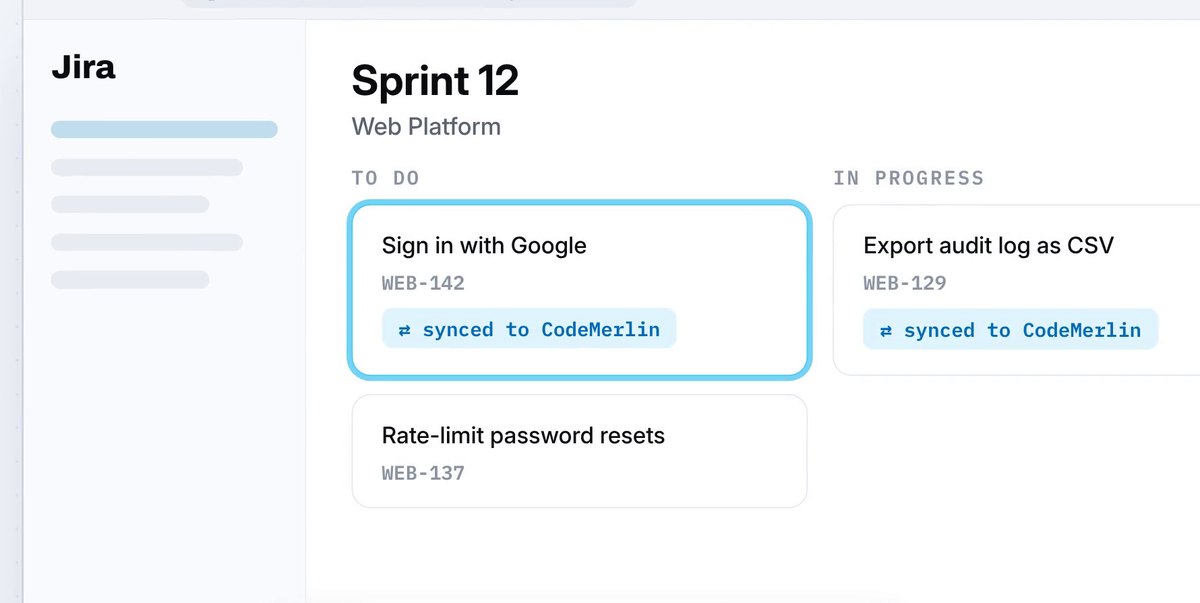
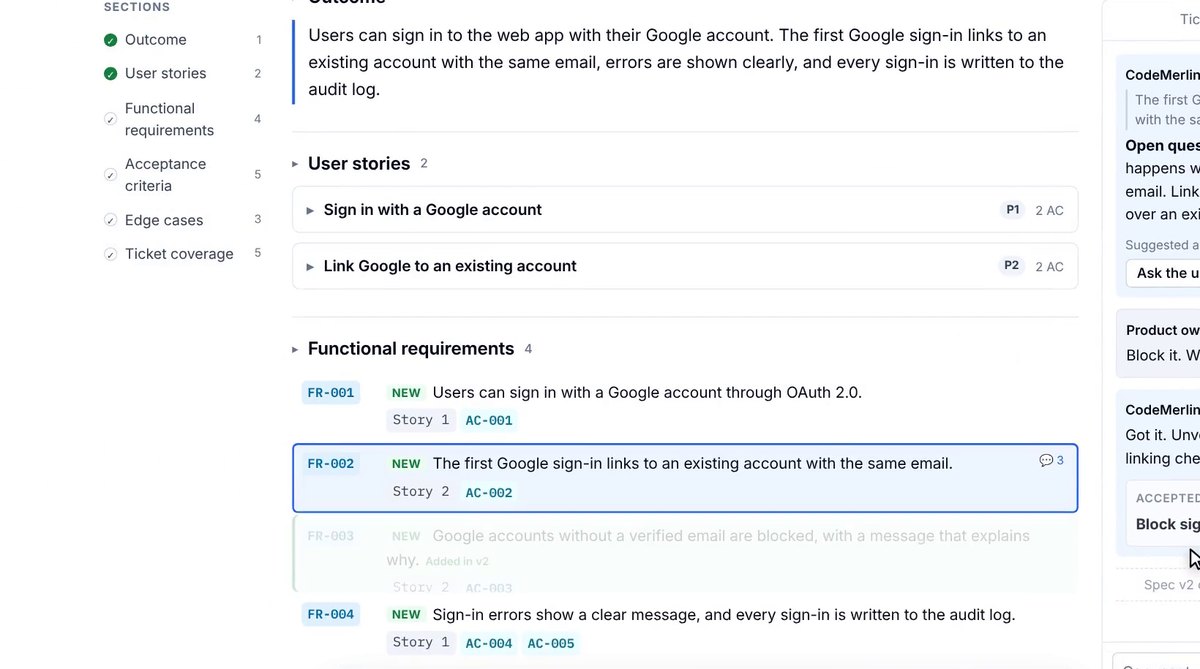
It starts inside the tools we already used. Tickets sync both ways with Jira and Linear — nothing is re-entered, nothing drifts out of date. From the ticket, CodeMerlin writes a testable spec with acceptance criteria and puts the open questions at the top, so a person settles the ambiguity before an agent writes a line of code.
The expensive mistakes were never in the code. They were in what the code was asked to do.
Different by design
Review the intent, not just the diff
Plenty of tools will review a pull request. They read the diff: style, bugs, patterns. CodeMerlin reviews the pull request against the approved spec — did this change deliver what was asked? That difference sounds small and changes everything downstream.
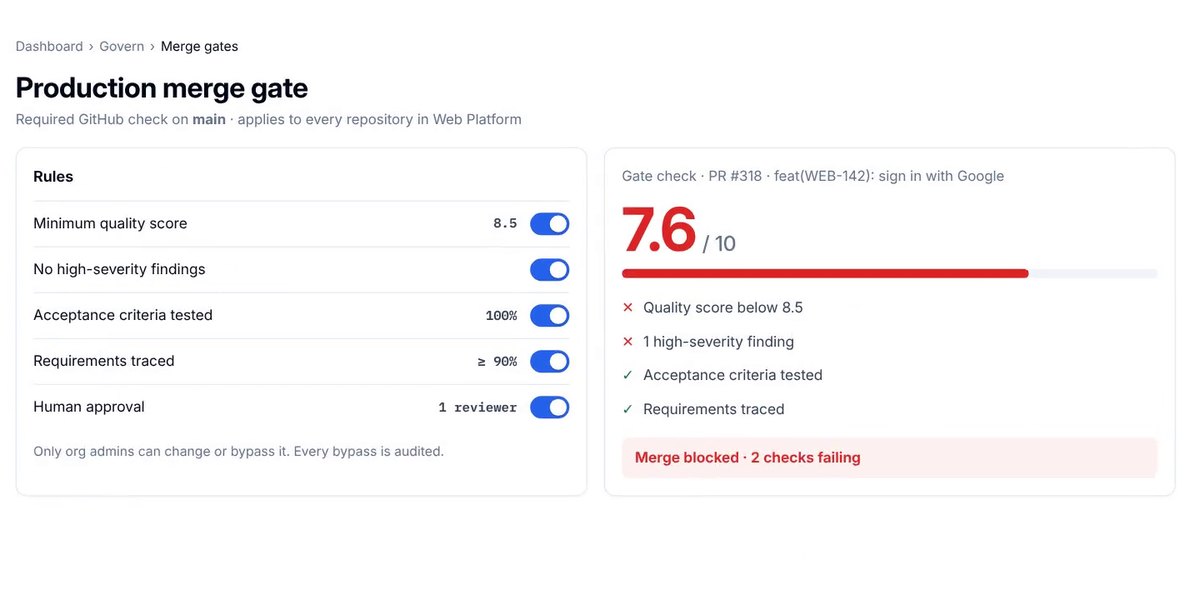
It also acts on the answer. The merge gate holds a pull request until it demonstrably delivers the spec, which means "done" stops being an opinion. And because every ticket, spec, plan and PR hangs on one thread, leadership gets a single view of where work stands across teams — without asking anyone to fill in a status report.
There's nothing new to learn. Engineers keep their IDE and their agents, product keeps Jira or Linear, reviewers keep GitHub or GitLab. CodeMerlin is the layer between them, in your cloud or on-prem, with your choice of model.
Why we trust it
We ran it on ourselves first
CodeMerlin governed QCerris delivery before it had a name or a website. Our own teams were the first users and the harshest reviewers, and the features that exist are the ones that survived real projects: the spec gate exists because vague tickets burned us, the merge gate exists because fast code without proof burned our clients.
We built it because we needed it. We kept it because it works.
Built by QCerris. Run on QCerris. Ready for you.
See CodeMerlin in action →